What Size Marquee Do I Need?
The honest Brisbane guide — how many guests fit, what to allow for a dance floor, and why clearspan changes everything.
Use the Size Finder Tool →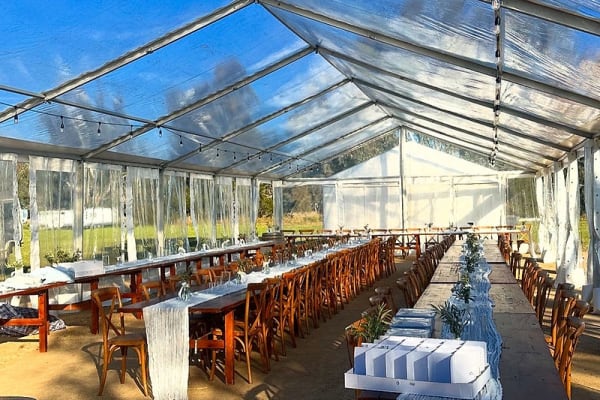
Marquee Capacity at a Glance
Figures below assume standard round tables (1.5m diameter), chairs, and light catering setup. Subtract 15–20% if adding a dance floor.
| Size | Area | Seated Dinner | Cocktail |
|---|---|---|---|
| 6m × 3m | 18m² | ~15 | ~25 |
| 6m × 6m | 36m² | ~30 | ~50 |
| 6m × 9m | 54m² | ~45 | ~70 |
| 6m × 12m | 72m² | ~60 | ~90 |
| 8m × 9m | 72m² | 60–80 | ~100 |
| 8m × 12m | 96m² | 80–100 | ~130 |
| 8m × 15m | 120m² | 100–120 | ~160 |
| 8m × 18m | 144m² | 120–150 | ~190 |
| 8m × 21m | 168m² | 150–180 | ~220 |
Estimates only. Actual capacity varies with table configuration, aisle width, and add-ons.
Seated, Cocktail, or Mixed Layout?
Seated Dinner
Requires the most floor space. Round tables of 8–10 guests, plus aisles between tables (minimum 1.2m). Caterers need a back-of-house area — typically 10–15m² — that should not come out of your guest space.
Cocktail / Standing
Uses the least space. High-top tables for 4–6 people, bar leaner style. You can fit 40–50% more guests in the same footprint compared with seated dining. Works well for after-work functions, engagement parties, and casual milestones.
Mixed (Most Popular)
Seated dining for 60–70% of guests, standing/lounge zones for the rest. Gives people the freedom to move around without the whole event feeling like a school cafeteria. Most Brisbane events — weddings, milestone birthdays, formals — use this layout.
The Dance Floor Trap
This is the most common sizing mistake. A 4m × 4m dance floor (the minimum for 50 people who actually dance) takes 16m² out of your marquee. If you've sized for 80 seated guests and then add a dance floor, you've lost space for roughly 10 tables.
The fix: go one size up if dancing is part of the plan. For a 100-person seated dinner with dance floor, a 8m × 15m is comfortable. A 8m × 12m technically fits the numbers but gets cramped once the dance floor hire goes in.
Same logic applies to staging and DJ booths. A 2m × 4m stage for a band takes another 8m² — size for it upfront, not as an afterthought. Need festoon lighting or a generator too? Add those footprints before locking in a size.
No Centre Poles — Every Metre Is Usable
Traditional frame marquees have internal support poles running down the centre — sometimes every 3 metres. These poles sit right in the middle of your event and force awkward table arrangements. Guests end up with a pole blocking their view of the dance floor or speeches.
Clearspan marquees use an aluminium portal frame that spans the full width without any internal poles. Every square metre is clear, usable floor space. The practical effect: a 8m × 12m clearspan marquee delivers more usable guest space than a 8m × 15m traditional frame tent.
All In-Tents Events marquees are clearspan. When you use our capacity figures, you're getting real usable space — not a number that assumes guests will work around poles.
Practical Sizing Tips
- When in doubt, go one size up. A slightly oversized marquee feels open and comfortable. An undersized one feels chaotic.
- Account for catering space separately — a 10–15m² back-of-house area for caterers is standard and should not come out of guest space. Your tables and chairs are separate line items — we size your package once your layout is confirmed.
- For weddings: the bridal table often runs along one end wall — this reduces effective seating width. Size accordingly.
- If you have a bouncy castle, bar station, or photo booth, add those footprints to your total before selecting a size.
- The Size Finder tool does all of this automatically — enter your guest count, layout type, and add-ons and it shows you the right size with live pricing.
Not Sure? Use the Size Finder.
Enter your guest count, layout preference, and add-ons. Get an instant size recommendation with live pricing — no obligation.